
Central London Property Sales: Start of 2026 vs 2025
Central London’s housing market has been through a period of subdued activity and price adjustment over the past year. As we move into February 2026, the market shows signs of stabilising - but the narrative is nuanced. Here’s a breakdown of what’s changed and what remains consistent.
2025: A Year of Soft Prices and Cooling Demand
Throughout 2025, central London, particularly the prime sales segment, experienced continued price softening and low transaction volumes:
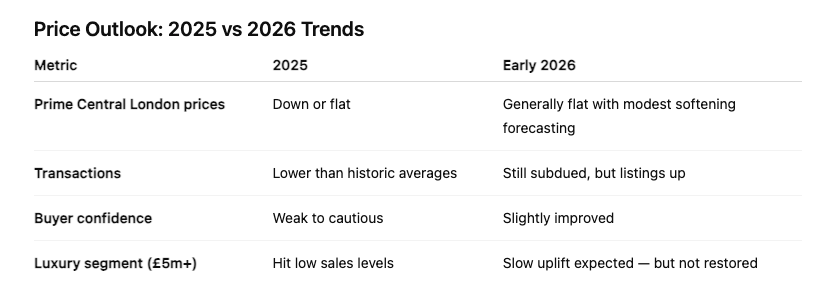
Price falls continued in prime central London, with values lower than in previous years, and some reports indicating drops through much of 2025, particularly in the higher-end market.
Transaction levels were subdued, with fewer properties actually selling compared to pre-pandemic norms and to 2024.
Listings were more abundant, giving buyers the impression of choice, but this didn’t translate immediately into sales.
Why? High taxes for international buyers, continued post-tax and regulatory uncertainty, and affordability pressures kept many would-be buyers sidelined.
In fact, home sales worth £5 million+ hit a five-year low in 2025, highlighting the cooling of London’s luxury market.
Early 2026: Stabilisation and Signs of Life
As 2026 begins, the market isn’t roaring back but there are early signs of stabilisation:
🔹 Market Sentiment Improving
A recent survey shows buyer enquiries and agreed sales indicators strengthening, with fewer negative readings than late 2025. Confidence among agents has risen to the highest level since December 2024 which could be a possible signal that the market has bottomed out.
🔹 Price Trends Flattening
Some data suggests prices in prime central areas have reached a level of stability, with milder declines forecast for 2026 compared to last year. There are even modest forecasts for flat or slightly positive price movement across selected segments.
🔹 Supply vs Sales
Property supply remains healthy, with more new instructions at the start of 2026 than a year earlier but transactions are still lower. This means buyer choice is broad, but decision-making remains cautious.
🔹 Buyer Type Shifts
With softer pricing and some easing in mortgage costs, domestic buyers including first-time buyers and relocating Londoners are more visible in early 2026 searches and negotiations. However, international high-net-worth participation is still muted relative to historic levels.
Price Outlook: 2025 vs 2026 Trends
Mortgage & Affordability Dynamics
Interest rate cuts by the Bank of England and a slight easing in mortgage pricing have helped restore some buyer confidence, especially for non-prime purchases.
Economic Backdrop
The wider UK economy ended 2025 in a phase of minimal growth, which lifted uncertainty and may have encouraged buyers to re-enter the market cautiously.
Tax and Policy Clarity
Greater clarity on property taxes has removed some earlier headwinds that dampened 2025 activity, though stamp duty and other costs remain considerations for investors and homeowners alike.
What This Means for Buyers and Sellers
For Sellers
Patience and pricing realism are key. While listings are up and buyers are active, sellers who price competitively and position homes with clear value propositions will attract more interest.
For Buyers
Opportunities persist. Buyers have more choice and better negotiation power than in recent years but patience remains important as markets continue to adjust.
For Investors
The luxury segment still trails behind broader recovery, but emerging pockets of value and low-pressure buying conditions may yield longer-term gains if economic momentum strengthens.
Final Takeaway
The start of 2026 in central London isn’t marked by a dramatic rebound but rather by greater stability, improving sentiment, and cautious buyer engagement compared to 2025’s quieter market.
Prices are no longer drifting down as sharply, transactions are beginning to stir, and both buyers and sellers are finding common ground, even if activity levels aren’t yet robust.